


Do service dogs in New Jersey need to wear vests? This question is often debated. We’ll look into service animal laws and New Jersey’s rules to answer it.
It’s important to know about service dog vest rules in New Jersey. Whether you’re a handler, business owner, or just a concerned citizen, understanding these rules is key. It ensures these animals get the respect and access they need.
We’ll dive into the details of service dog regulations in New Jersey. We’ll talk about federal and state laws, the benefits of vests, and how to pick the right ID for your service animal. Our aim is to give you clear, accurate info to help you understand these rules.
Understanding Service Dog Laws in New Jersey
Service dog laws are key for equal access for people with disabilities. We’ll look at the rules for service animals in New Jersey. This includes both federal and state laws.
Federal ADA Guidelines for Service Animals
The Americans with Disabilities Act (ADA) sets the rules for service animals nationwide. It says service dogs can go anywhere in public. Businesses can only ask two things: if the dog is a service animal and what it does.
No ID or papers are needed. This makes it easy for service dogs to be where they need to be.
New Jersey State-Specific Regulations
New Jersey follows the ADA but has its own rules too. The New Jersey Law Against Discrimination (LAD) gives more protection. It covers more disabilities and places like homes and work.
This means service dogs have more rights in New Jersey. They can go more places.
Legal Definitions of Service Dogs
In New Jersey, a service dog is an animal trained for a person with a disability. It can help with things like guiding the blind or alerting the deaf. It can also help with moving around.
But, emotional support animals are not the same. They are not considered service animals under the law.
Knowing these laws is important for everyone. It helps make sure service dogs get the respect and access they need. We recommend that you always consult an attorney and conduct your own research regarding service dog laws in your area.
Does a service dog have to wear a vest in NJ?
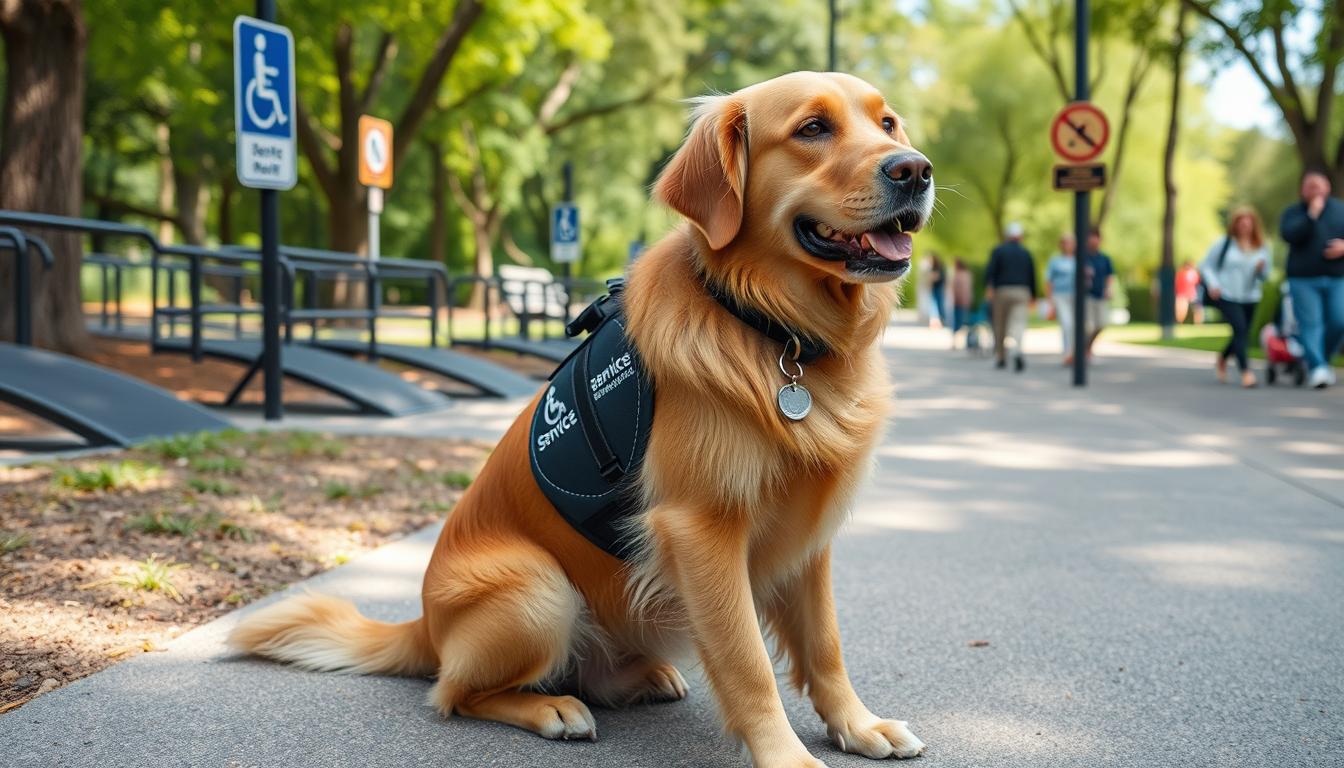
In New Jersey, service dogs don’t have to wear vests. The state follows federal ADA rules, which don’t require vests. This gives handlers the freedom to decide if their service animal wears identifying gear.

Vests are not required but many find them useful. They help identify service animals in public places. This can make interactions easier and cut down on questions about the dog’s role.
Businesses can’t ask for proof of a dog’s service animal status, even without a vest.
There are many vest styles available:
- Standard vest with “Service Dog” patches
- Harness-style vests for added comfort
- Lightweight mesh vests for warm weather
The choice to use a vest is up to the handler. Some like the clarity it offers, while others don’t need it. Knowing your rights and responsibilities as a service dog handler in New Jersey is key.
Benefits of Using Service Dog Vests and Identification
Service dog vests are key in identifying service animals and making public access easier. They are not mandatory but bring many benefits to handlers and their dogs.
Public Recognition and Access
Vests make it clear that a dog is a service animal. Seeing a dog in a vest tells people its purpose. This leads to easier access in places like restaurants, stores, and on public transport.
Professional Appearance
A vest makes a service dog look professional. This look changes how people see the dog and its handler. It shows the dog is working, not just a pet, and gets respect from others.
Avoiding Confrontations
Vests help avoid confusion. They show the dog’s role in public places, cutting down on questions. This makes going out less stressful for handlers and their dogs.
Even though vests are not required, they greatly improve the experience for service dog teams. They make identification easy and access to public places better, proving vests are a valuable asset.
Choosing the Right Service Dog Vest
Choosing the right vest for your service dog is key. Different vests meet different needs, but the best one boosts visibility and comfort. Let’s look at what to consider when picking a vest for your dog.
Types of Service Dog Vests
Service dog vests come in many styles. Some popular ones are:
- Cape vests: Lightweight and easy to put on
- Harness vests: Offer more control and support
- Backpack vests: Provide storage for supplies
Each type meets different needs. Choose based on your dog’s role and what you prefer.
Size and Fit Considerations
A vest that fits well is vital for your dog’s comfort. Measure your dog’s chest, neck, and length before buying. The vest should let your dog move freely without being too loose. Many makers have sizing guides to help you find the right fit.
Material and Durability
Durability is a must for service dog vests. Look for ones made from strong materials like nylon or polyester. These fabrics last through daily use while staying light. Water-resistant vests are good for dogs working in all kinds of weather. Remember, a good vest is an investment in your dog’s comfort and work.
Required Identification and Documentation in New Jersey
In New Jersey, service dog rules don’t ask for specific ID or papers. This follows federal ADA rules, which protect people with disabilities. Even though some people get service dog certification, it’s not needed by law.
Businesses in New Jersey can only ask two questions about a service dog:
- Is the dog a service animal required because of a disability?
- What work or task has the dog been trained to perform?
Places can’t ask for proof of certification or service dog training or about the person’s disability. This keeps service dog handlers’ privacy and ensures real service animals are recognized.
While not needed, some handlers carry a letter from their doctor or a card about their dog’s tasks. This can help in public places and show the dog’s purpose if asked.
Service dog certification programs are out there, but the ADA and New Jersey law don’t recognize them. The main thing is the dog’s training and its ability to do specific tasks, not official papers.
Public Access Rights for Service Dogs in New Jersey
Service dogs are vital for people with disabilities. In New Jersey, they have wide access to public areas. We’ll look at where they can go and how to solve access problems.
Where Service Dogs Are Allowed
Service dogs can go into many places in New Jersey. This includes:
- Restaurants and cafes
- Retail stores
- Hotels and lodging
- Public transportation
- Government buildings
- Parks and recreational areas
Business Owner Rights and Responsibilities
Business owners have duties when service dogs visit. They can ask if the dog is a service animal and what it does. But they can’t ask for proof of disability or see the dog’s skills.
Handling Access Disputes
If a business won’t let a service dog in, stay calm. Explain your rights and teach the staff about the laws. If the problem doesn’t go away, call local authorities or file a complaint with the New Jersey Division on Civil Rights.
Knowing the rules for service dogs helps everyone. It makes public places more welcoming for all.
Training Requirements for Service Dogs in NJ
Service dog training is key to their role. In New Jersey, there are no state rules for training. But, service dogs must meet ADA standards to qualify.
Minimum Training Standards
Service dogs must learn tasks linked to their handler’s disability. This training helps with daily tasks, alerts, or physical support. They also need to behave well in public.
Certified Training Programs
Many groups in New Jersey offer service dog certification. These programs teach obedience, task skills, and public behavior. Certification shows a dog’s training level, though it’s not required by law.
Owner-Training Options
The ADA lets people train their own service dogs. This can save money and tailor training. It’s wise to work with a pro to meet standards. The goal is to train for your specific needs.
- Choose a training method that fits your needs and abilities
- Focus on task-specific training related to your disability
- Ensure your dog can behave appropriately in public settings
- Consider seeking guidance from experienced trainers or organizations
Common Misconceptions About Service Dog Vests
Many people get confused about service dog vests. They think a vest makes a dog a service animal. But, vests help identify service animals, and they’re not required by law.
Some believe only certain breeds can be service dogs. But, any breed can be trained to help its handler. It’s the dog’s skills that matter, not its breed.
Buying a vest online doesn’t make a pet a service dog. This is not only false but also illegal. Pretending a pet is a service animal can lead to fines and penalties.
There’s also a mix-up between service dogs and therapy dogs. Service dogs assist people with disabilities, while therapy dogs offer comfort. The vests for service dogs and therapy dogs are different.
Lastly, some think asking for proof of a dog’s service status is illegal. But, businesses can ask if the dog is a service animal and what tasks it’s trained for. Knowing this helps us understand and respect service animals’ roles.
Distinguishing Service Dogs from Emotional Support Animals
It’s important to know the difference between service dogs and emotional support animals (ESAs). This knowledge helps us understand service animal laws better. We’ll look at the main differences to guide you on access rights for both.
Legal Differences
Service dogs are trained to help people with disabilities. They are protected by the Americans with Disabilities Act (ADA). On the other hand, ESAs offer comfort but aren’t trained for specific tasks. They don’t have the same legal rights as service dogs.
Access Rights Comparison
Service dogs have wide access rights. They can go with their handlers in public places like restaurants and stores. ESAs, though, have more limited access rights. They can live in housing with no-pet policies but don’t have the same public access as service dogs.
Required Documentation Differences
Service dogs don’t need special papers for public access. Businesses can only ask if the dog is a service animal and what it does. ESAs, though, need a letter from a mental health professional for housing or air travel. This letter doesn’t give them the same access rights as service dogs.
- Service dogs: No specific documentation required
- ESAs: Often need professional letter for housing or travel
Understanding these differences is key to following service animal laws. It ensures we respect the access rights of service dog teams.
Conclusion
We’ve talked a lot about New Jersey service dog rules and service dog regulations. These laws protect people with disabilities and their service animals. In New Jersey, service dogs don’t need vests, but many wear them for easier access.
Knowing these rules helps everyone. Businesses can serve their customers better, and the public learns to respect service dogs. For handlers, understanding their rights makes daily life easier. Remember, service dogs are not pets but highly trained helpers.
Service dog laws can change, so it’s wise to stay updated. Check official sources like the New Jersey Division on Civil Rights for news. By following these guidelines, we can make society more inclusive for all.
FAQ
Are service dogs required to wear vests in New Jersey?
No, service dogs don’t have to wear vests in New Jersey. But, many handlers use vests to make it easier for others to know they have a service dog.
What identification is required for service dogs in New Jersey?
In New Jersey, service dogs don’t need special ID. Businesses can only ask if the dog is a service animal and what it’s trained to do.
Can I train my own service dog in New Jersey?
Yes, you can train your own service dog in New Jersey. The law doesn’t say you need a certified trainer.
Where are service dogs allowed in New Jersey?
Service dogs can go anywhere the public can in New Jersey. This includes restaurants, stores, hospitals, and public transport. This follows federal ADA rules.
What’s the difference between a service dog and an emotional support animal?
Service dogs are trained to help people with disabilities. Emotional support animals provide comfort but don’t have the same rights. Service dogs can go more places.
Can businesses ask for proof of a service dog’s status?
No, businesses can’t ask for proof that a dog is a service animal. They can only ask if it’s a service animal and what it’s trained to do.
Are there specific training requirements for service dogs in New Jersey?
New Jersey doesn’t have special training rules for service dogs. But, they must be trained to help with the handler’s disability and must be well-behaved in public.
Can I buy a service dog vest online and use it for my pet?
It’s illegal to pretend your pet is a service animal. You can buy vests online, but using them to fake your pet’s status is against the law.
How do I handle a situation where my service dog is denied access?
If your service dog is denied access, explain your rights under the ADA calmly. If the problem continues, you can file a complaint with the New Jersey Division on Civil Rights or the U.S. Department of Justice.
Do service dogs in training have the same access rights as fully trained service dogs in New Jersey?
Yes, in New Jersey, service dogs in training have the same rights as fully trained dogs. They must be with a trainer and follow certain rules.