


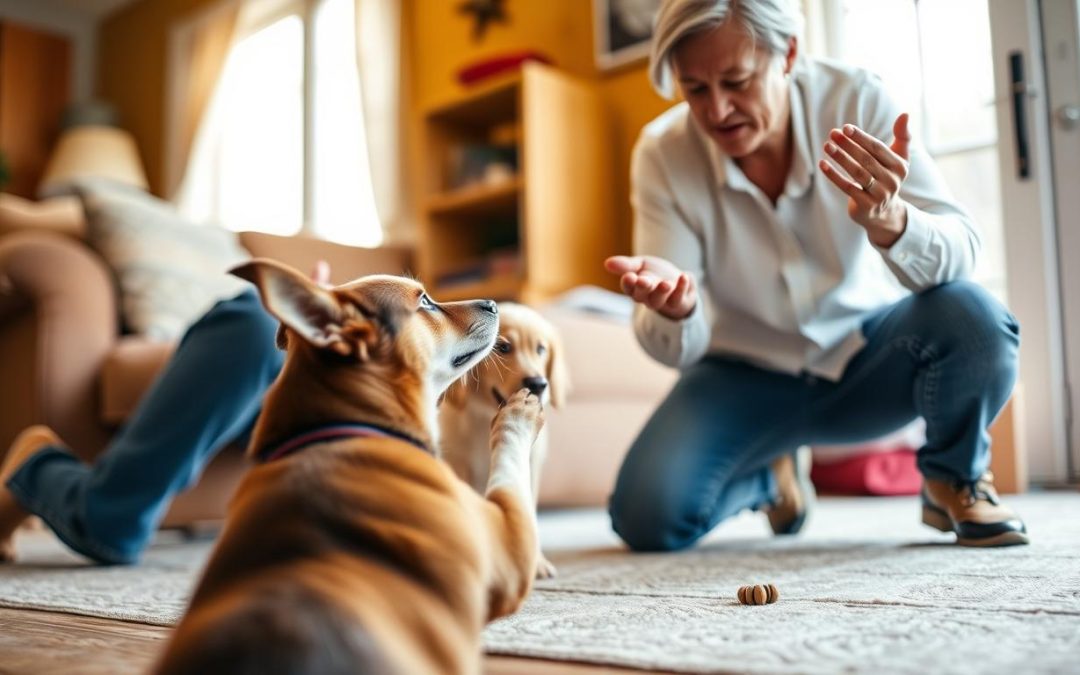
Ever thought about teaching an old dog new tricks? Many pet owners think it’s too late to train older dogs. They believe their senior dogs are too set in their ways to learn. But is this really true?
In this article, we challenge the idea that training older dogs is pointless. We’ll look at the benefits of training senior dogs. We’ll also share tips for successful training and stories of older dogs who learned new things.
Whether you’ve just adopted an older dog or have a long-time furry friend getting older, it’s never too late to start training. With patience, consistency, and the right approach, you can make your senior dog’s life better. You can also strengthen your bond and teach them new skills.
So, let’s explore the power of older dog training tips and techniques. They can help you and your senior dog reach new heights together. Get ready to be inspired and learn how to make the most of your time with your beloved dog, no matter their age.
Benefits of Training an Older Dog
Training an older dog might seem tough, but it has many benefits. It can make their life better and strengthen your bond. With patience, consistency, and positive reinforcement, you can open new doors for your senior dog.
Improved Quality of Life
One big plus of retraining an older dog is bettering their life quality. Teaching them new things and reinforcing good behavior boosts their confidence. They can handle age-related changes and adapt to new situations more easily.
Strengthened Bond with Owner
Training sessions are a great way to bond with your older dog. Working together on new skills and challenges deepens your connection. You’ll understand each other better, leading to a more rewarding relationship.
Increased Mental Stimulation
Dogs, like humans, need mental challenges as they age. Training keeps their minds sharp. Introducing new commands and games keeps them mentally active and happy.
Addressing Common Misconceptions
Many people think that teaching old dogs new tricks is impossible. They believe older dogs are too set in their ways to learn. But this is not true.
Dogs of any age can learn and adapt to new things. While puppies might pick up new skills quickly, older dogs can also benefit from training. They can even enjoy it with positive reinforcement.
Some think older dogs don’t want to learn or participate in training. They assume senior dogs lack the energy of younger dogs. But, with the right approach, older dogs can be eager to learn and please their owners.
Every dog is different, no matter their age. While some older dogs might face physical or mental challenges, many stay sharp and open to new experiences. By clearing up these myths, we can unlock new possibilities for our senior dogs.
Key Considerations for Training Older Dogs
Training an older dog needs a special approach. We must consider their unique needs and limitations. This way, we can help them succeed and strengthen our bond.
Health and Physical Limitations
Older dogs may face health issues or physical limits. It’s important to check with a vet to understand their health. This helps us adjust our training to fit their abilities, keeping them safe and comfortable.
Patience and Consistency
Training an older dog needs patience and consistency. Senior dogs may learn slower than puppies. We should be calm and positive, celebrating small wins.
Consistency helps them understand what’s expected. It also reinforces good habits.
Positive Reinforcement Techniques
Positive reinforcement is key for older dogs. Rewarding them with treats and praise motivates them. Avoid harsh corrections, as they can stress them out.
Instead, focus on positive reinforcement. With patience and positive reinforcement for older dogs, they can achieve great things.
Essential Training Areas for Older Dogs
When it comes to senior dog obedience training, there are key areas to focus on. These areas help keep your older dog happy and strengthen your bond. They make sure your dog stays safe and listens to you.
Basic Obedience Commands
Every dog, no matter their age, needs to learn basic commands. Teaching your senior dog to sit, place, come, and heel is vital. It helps them move safely and follow your directions.
Practicing these commands often keeps their mind active. It also encourages good behavior.
Housetraining Refresher
As dogs get older, they might have trouble with bladder control or forget how to housetrain. Retraining an older dog on housetraining basics is important. It prevents accidents and keeps your home clean.
Stick to a routine, take them out often, and praise them when they go in the right spot.
Socialization and Manners
Socialization is important for older dogs too. Introduce them to different people, animals, and places. This keeps them confident and well-behaved.
Teach them not to jump on people or bark too much. This way, they stay a friendly and well-adjusted pet.
By focusing on these key areas, your senior dog can live a happy and fulfilling life. Remember, it’s never too late to teach an old dog new tricks!
Adapting Training Methods for Senior Dogs
Training older dogs is different from training younger ones. As dogs age, they may have less energy and face physical and mental changes. But, with the right approach, training can be rewarding and successful.
It’s important to make older dogs comfortable during training. Short, frequent sessions work better than long ones. This helps them stay focused and avoid getting tired. Also, consider any health issues like arthritis and adjust training methods.
Positive reinforcement is key for training older dogs. Use treats, praise, and affection to reward good behavior. This keeps them motivated and strengthens the bond with their owner. Clicker training is also great for older dogs as it gives a clear signal for good behavior.
Training older dogs requires patience and understanding. They may learn slower, but with consistency, they can make progress. Celebrate small wins and don’t get discouraged if it takes time. Every dog is different, so tailor training to their needs.
By adapting training for senior dogs, we help them learn and thrive in their golden years. With patience, positive reinforcement, and understanding, training can be a rewarding experience for both dogs and their owners.
Is it too late to train an older dog?
Many pet owners wonder if they can teach an older dog new tricks. The answer is yes, it’s never too late. Senior dogs can learn new skills and behaviors with the right approach and patience.
Several things affect an older dog’s ability to learn. These include their past training, personality, and health. Dogs with positive past experiences are more likely to learn new things. Some dogs stay eager to please and mentally sharp, making training rewarding for both.
Factors Influencing Trainability
When deciding if it’s too late to train an older dog, consider these factors:
- Previous training experience
- Individual personality and temperament
- Overall health and physical limitations
- Motivation and willingness to learn
Success Stories of Older Dogs Learning New Tricks
There are many inspiring stories of senior dogs learning new tricks. For example, Max, a 12-year-old golden retriever, learned to play the piano. Bella, a 10-year-old border collie, mastered painting with her paws. These stories show that older dogs can learn with dedication and the right training.
If you’re wondering if it’s too late to train an older dog, don’t worry. It’s never too late. With patience, consistency, and a positive attitude, you can help your senior dog learn and grow. This will improve their life and strengthen your bond. A good first step is contacting a South Jersey dog training expert.
Overcoming Behavioral Issues in Older Dogs
As our beloved canine companions age, they may develop behavioral issues. These can be concerning for pet owners. But, it’s important to remember that it’s never too late to address these challenges. By identifying the root cause and using effective dog behavior modification techniques, we can help our senior dogs lead happy, well-behaved lives.
The first step in overcoming behavioral issues in older dogs is to identify the underlying reason. Common causes include:
- Pain or discomfort due to age-related health conditions
- Cognitive decline or confusion
- Changes in routine or environment
- Anxiety or stress
Once we understand the root cause, we can develop a tailored approach. This may involve working closely with a veterinarian or professional dog trainer. Together, we can create a behavior modification plan specific to your senior dog’s needs.
Implementing Behavior Modification Techniques
When it comes to correcting behavior in older dogs, patience and consistency are key. Positive reinforcement training is an effective approach. It rewards desired behaviors with treats, praise, or affection. This method helps to strengthen the bond between owner and pet while encouraging good behavior.
Other techniques that can be helpful in modifying behavior include:
- Providing mental stimulation through puzzle toys and training exercises
- Maintaining a consistent daily routine
- Ensuring a comfortable and safe environment
- Offering plenty of opportunities for exercise and socialization, within your dog’s physical limitations
Remember, every dog is unique, and what works for one may not work for another. Be patient, stay positive, and celebrate the small victories along the way. With dedication and the right approach, you can help your senior dog overcome behavioral challenges. This way, they can enjoy a fulfilling life by your side.
Engaging the Mind: Mental Stimulation for Older Dogs
As our beloved canine companions age, it’s vital to keep their minds sharp. Mental stimulation is key to their cognitive function and well-being. Interactive games, puzzles, and training exercises can make their days more engaging and fulfilling.
Positive reinforcement training is a great way to mentally stimulate older dogs. Even if they know basic commands, learning new tricks is beneficial. Try teaching them tricks like “roll over,” “spin,” or “shake” using treats and praise.
This not only exercises their mind but also strengthens your bond. It’s a wonderful way to keep their spirits high.
Puzzle toys and interactive feeders are also excellent for mental stimulation. They challenge your dog to solve problems to get treats. Some popular options include:
- Kong toys filled with frozen peanut butter or soft dog food
- Treat dispensing balls or cubes
- Snuffle mats or nose work blankets
Engaging your older dog in sensory-rich activities is also beneficial. Take them on walks to new places. Let them explore different sights, sounds, and smells.
Set up a small obstacle course in your backyard or living room. Encourage them to navigate through it for treats. Simple games like hide-and-seek or tug-of-war can also keep their mind active and their tail wagging.
Every dog is unique, so tailor activities to their needs and abilities. By keeping their mind active, you can help them enjoy a high quality of life for years to come.
Celebrating the Journey: Enjoying Life with Your Trained Senior Dog
Reflecting on training an older dog, we celebrate their growth and the bond we’ve strengthened. Using positive reinforcement has improved their life and ours. Now, we can enjoy the companionship of a well-trained senior dog.
Every moment with our older dog is precious. We share joy on walks and cozy moments on the couch. Their loyalty and love remind us of their special place in our hearts. They offer comfort and support through life’s challenges.
Training an older dog is more than teaching tricks. It’s about building a bond of trust and respect. By doing so, we’ve made their golden years better and enriched our own lives. Let’s celebrate our journey and cherish the memories with our senior dogs.
FAQ
Is it ever too late to start training an older dog?
No, it’s never too late to start training an older dog. Older dogs are often more attentive and eager to please. They can learn new tricks and behaviors at any age with patience and positive reinforcement.
What are the benefits of training an older dog?
Training an older dog improves their quality of life and mental stimulation. It strengthens the bond between dog and owner. It also helps prevent or address behavioral issues, making life happier and more fulfilling for both.
How do I adapt my training methods for an older dog?
When training an older dog, consider their unique needs and limitations. Assess their health and physical capabilities. Use positive reinforcement and break training into shorter intervals with plenty of rest and rewards.
What are some essential training areas for older dogs?
All dogs, regardless of age, need to master basic obedience commands and housetraining. Socialization and manners are also key. Focusing on these areas helps our senior dogs stay well-behaved and confident.
Can I overcome behavioral issues in my older dog through training?
Yes, behavioral issues in older dogs can be addressed through training. Identify the root cause and implement strategies to help our senior dogs. With patience and consistency, we can help them develop better behaviors and enjoy a better quality of life.
How can I keep my older dog mentally stimulated through training?
Engaging the mind is vital for older dogs’ cognitive function and well-being. Incorporate interactive games, puzzles, and training exercises into their daily routine. Teaching new tricks and practicing obedience skills keeps them mentally sharp and emotionally fulfilled.